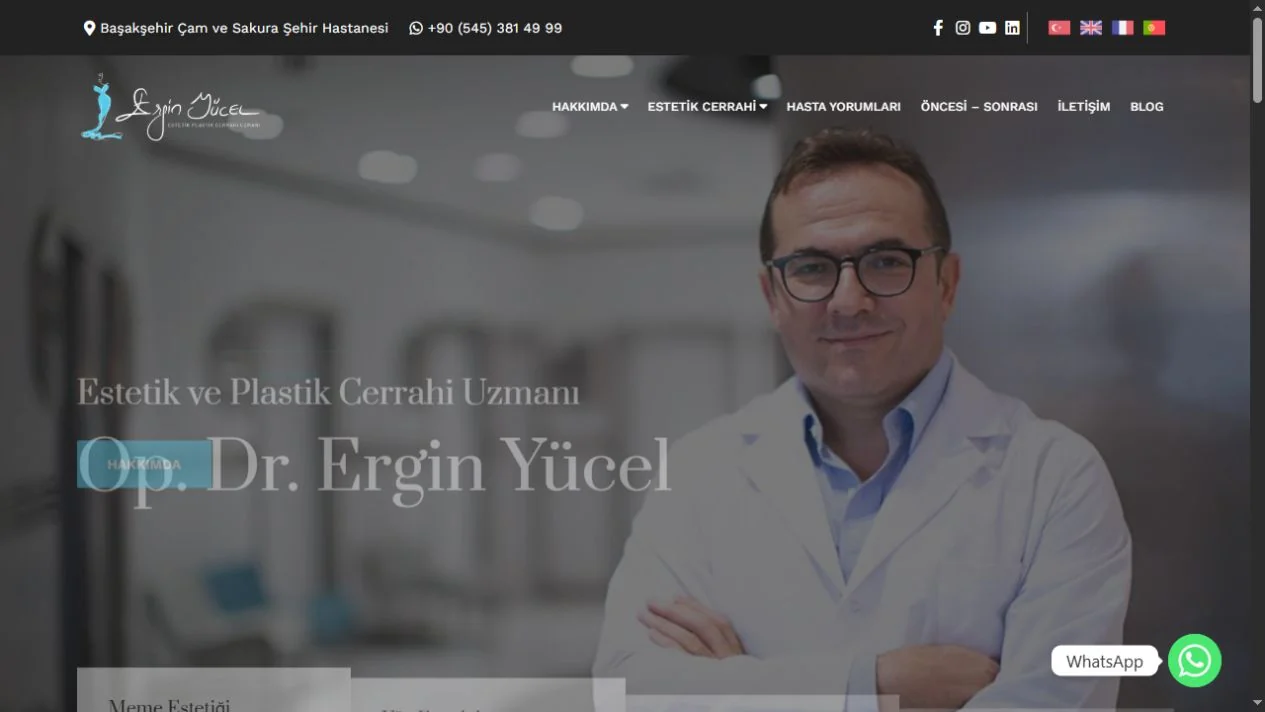
Our surgical clinic website service organises specialties, surgeon profiles and consultation enquiries. Surgeon web design focuses on clear service information, clinician-approved explanations and accessible mobile contact options.
We give professional profiles, specialty pages and information articles distinct roles. The website structure supports content review and helps visitors reach relevant information and the clinic’s contact channels.
WordPress & Elementor · Mobile layouts · Editable content
● ● ●
Op. Dr. Büşra Gedik Toprak
WEAPSE ↗
Client work / Op. Dr. Büşra Gedik Toprak
01 / PAGE STRUCTURE
Specialty and practitioner information for surgical clinic websites
Visitors need to find the relevant specialty and practitioner before making an enquiry. We connect professional profiles, approved information and consultation routes. Existing content migration, language versions and scheduling software connections are reviewed separately when defining scope. Medical content follows the clinic’s approval process.
01
Areas of practice
We agree the main specialties and the subjects that belong beneath them. Clear internal links connect broad professional information to relevant articles.
02
Professional background
Education, professional titles and experience use information confirmed by the surgeon. Specialty pages link to a consistent professional profile.
03
Content review
Topics, sources, clinical reviewers and update responsibilities are agreed in the publishing plan. Medical copy and imagery go through the clinic’s approval process.
04
The right contact route
An initial enquiry reaches the clinic or administrative team that can respond. Where institutional and private practice contacts differ, the website identifies the appropriate channel.
02 / CONTENT & DESIGN
Specialty pages and information articles have different roles.
A specialty page introduces the surgeon’s area of practice and the route to further information. An article addresses a specific question selected by the clinical team. Linking the two gives each page a useful purpose and reduces repetition.
We agree sources and approval responsibilities at the start. Draft copy, images and review dates are considered together. The design presents information approved by the surgeon without making treatment decisions or outcome promises for visitors.
If a surgeon works at several institutions, affiliations and contact details need confirmation. We distinguish information about the individual professional from information about the institutions and their facilities. The website should reflect the services actually available.
Search planning considers the professional’s name, genuine areas of practice and actual locations. Profiles and specialty pages receive readable URLs, distinct titles and relevant internal links. The scope also explains how clinical approval fits into ongoing content work.
During a redesign, we review existing articles and URLs with incoming links. Redirects, crawlability and mobile contact journeys are part of the launch checks. Available search data can guide the next improvements.
Specialty and article counts, professional profiles, the approval process and language requirements shape the scope. Migrating existing material and URLs is assessed separately. The proposal sets out design, technical setup, content preparation and continuing support.
Content editors and clinical approvers may have different responsibilities. We plan WordPress user roles and editable areas accordingly and demonstrate routine text and image updates to your team.
Do you build websites for individual surgeons and teams?
Both can be planned. An individual website centres on the surgeon’s background and practice. A team website needs a structure connecting professionals, specialties and institutional information.
Who reviews medical information?
The surgeon or an appointed clinical reviewer approves medical accuracy and professional information. We work on presentation, readability and technical SEO and include the review stage in the delivery plan.
Can a surgeon’s different working locations be listed?
Several locations can be presented using verified institutional and contact details. We agree which team receives enquiries and who keeps each location’s information current.
Can existing articles and URLs be migrated?
We list accessible URLs, map them to the new structure and agree which material to retain. Redirect preparation and content approval are part of the migration plan.
Can the website have several languages?
Separate language URLs and page structures can be prepared. Medical terminology, professional details and contact information need review in each language. Translation responsibilities are defined in the proposal.
Does this include a patient records system?
A public information website has a different scope from patient records, medical documents or hospital software integration. Those needs require a separate assessment of security, permissions and existing systems.